Commercial Builders Perth

Blog, Commercial Builders Perth

How to Avoid Costly Mistakes on Commercial Projects

I’ve worked in the building industry long enough to see how commercial projects succeed and how to avoid costly mistakes on commercial projects. Over the years, I’ve been involved in everything from commercial partitions and ceilings through to full-scale fit-outs, industrial facilities, government works, and healthcare environments across Perth. Different sectors bring different pressures: compliance requirements, live operational constraints, tight programmes, budget sensitivity, but the underlying risks tend to repeat. In my experience, commercial projects rarely fail because of poor workmanship alone. More often, problems stem from incomplete scope definition, unclear contracts, underestimated site conditions or unrealistic financial assumptions. If you’re engaging building contractors in Perth for a commercial project, the real challenge isn’t finding someone who can build. It’s selecting someone who understands how to manage risk, structure the process properly and protect your investment from day one. Here’s what you need to know to avoid costly mistakes. What Does a Commercial Building Contractor in Perth Actually Do? A commercial building contractor isn’t just someone who puts trades on site. We manage subcontractors and specialist trades. We coordinate consultants, engineers and certifiers. We ensure compliance with WA building regulations and safety standards. We control procurement, monitor cost movements and administer variations. In many cases, we protect the operational continuity of a live environment while construction is underway. In commercial construction, the contractor carries both delivery risk and coordination risk. Put simply, a good contractor absorbs complexity so the client can stay focused on running their business. 1. Do Not Select a Contractor Based on Price Alone This is the most common mistake I see. Two proposals may look similar at first glance, but they often differ substantially in scope and risk allocation. The lowest quote frequently contains higher provisional sums, minimal compliance allowances, limited project management allocation or optimistic assumptions about site conditions. When those assumptions unravel, variations begin. If you are comparing building contractors in Perth, ask for a fully itemised scope of work. Compare inclusions and exclusions line by line. Understand how provisional sums and prime cost allowances are structured. Confirm how unforeseen site conditions will be handled. Cost certainty does not begin with price. It begins with clarity. My background in supply and estimating means I know exactly how quantities and allowances can be adjusted to create the appearance of competitiveness. Transparency is critical. 2. Verify Licensing, Compliance Knowledge and Sector Experience In Western Australia, contractors must be registered with Building and Energy WA and operate within strict regulatory frameworks. Beyond licensing, you need to verify insurance coverage, compliance history and sector-specific experience. Healthcare projects demand infection control awareness and accessibility compliance. Government facilities require documentation, discipline and controlled access planning. Industrial builds require fire engineering integration and operational workflow consideration. Heritage projects require structural sensitivity and regulatory coordination. If a contractor lacks experience in your sector, you are introducing avoidable risk. Experience matters. Not theoretical experience. By that, it means delivered experience in Perth, under WA regulations. Over 30 years in this industry has taught me that compliance is not something you “figure out later”. It must be built into the programme from day one. 3. Formalise the Contract Properly Most commercial disputes trace back to contract ambiguity. Even a fixed-price contract requires scrutiny. You must examine provisional sums (PS) and prime costs (PC) carefully. These are allowances, not guarantees. Excessive reliance on them increases the likelihood of escalation. A properly structured commercial contract should clearly define scope inclusions, exclusions, variation procedures, milestone payments, programme timelines, extension of time provisions and liquidated damages where applicable. Progress claims should align with verified milestones. Deposits should be commercially reasonable and compliant with WA standards. Strong contract discipline protects both parties. It creates accountability and clarity. 4. Conduct Proper Site Due Diligence In Perth, site conditions frequently drive unexpected costs. Reactive soil, drainage complications, structural upgrades within existing buildings and service relocation issues are common contributors to variation exposure. I have seen projects priced without adequate geotechnical review or structural validation. That creates unnecessary financial risk. Before finalising design and pricing, conduct a proper investigation. Maintain a realistic contingency allocation of approximately 10 to 15 per cent on renovations and upgrades where unknown variables exist. Contingency is not inefficiency. It is disciplined commercial planning. 5. Control Variations and Documentation Rigorously Mid-project changes are one of the most consistent drivers of cost escalation. All variations should be documented, costed and approved before implementation. Verbal agreements create ambiguity and erode control. Commercial projects should operate under structured reporting processes. That includes programme updates, variation registers, cost tracking against contract value and clear communication channels. This is not bureaucracy. It is governance. Over three decades, I have learned that structured documentation prevents conflict and protects relationships. 6. Design for Perth’s Climate and Long-Term Efficiency Perth’s climate influences lifecycle performance. Excessive western glazing, poor insulation and inadequate shading can significantly increase operational cooling costs. Passive design principles, appropriate orientation and durable materials reduce long-term expenditure. In commercial assets, lifecycle cost frequently outweighs initial capital cost. Investing correctly during construction is more economical than retrofitting later. A contractor who understands Perth conditions will consider long-term performance, not just handover completion. Final Thoughts In Perth’s regulatory and market environment, experience matters, not just in building, but in planning, coordinating and managing. In my 30 years in the industry as a registered builder, I’ve seen that commercial projects typically exceed budget due to incomplete scope documentation, high provisional sum exposure, late-stage design changes, underestimated site conditions, weak contract administration and material price volatility. None of these is unavoidable. But they are risks that can be managed through structured planning, due diligence and disciplined contractor selection. At Chest Constructions, we deliver commercial construction, fit-outs and renovations across Perth with a focus on compliance, programme control and cost certainty. If you are considering a commercial project and want an experienced, accountable builder who stands by their commitments, I welcome the opportunity to discuss your requirements.Contact our team to start the conversation.

Blog, Commercial Builders Perth

Practical Guide to Choosing a Commercial Builder in Perth

Construction projects globally and in Australia face frequent overruns, with 9 out of 10 projects exceeding budgets by an average of 15-28%. In Perth, residential costs have escalated by 40% in recent years, with similar commercial pressures amplifying this, often due to estimating 32% errors or 12% delays. Labour availability, materials pricing and site constraints all influence outcomes. Add to the fact that commercial construction in Western Australia operates under strict compliance frameworks and fluctuating market conditions. This guide is designed to answer those common questions and provide you with a structured framework for selecting the right commercial builder with clarity and confidence. What Is a Commercial Builder in Perth? A commercial builder in Perth is a licensed construction professional responsible for delivering non-residential projects such as offices, warehouses, healthcare facilities, retail premises, and government buildings. Their responsibilities typically include: In commercial construction, the builder is not simply constructing. They are managing execution, compliance and risk. With that foundation in mind, let’s look at the practical steps that reduce uncertainty when comparing commercial builders. Step 1: Confirm Relevant Commercial Experience One of the most common mistakes I see is selecting a builder based on general reputation rather than sector-specific experience. Not all builders operate at the same scale or within the same industries. If you’re comparing commercial builders in Perth, ask: Relevant experience reduces programme risk and limits variation exposure. It also explains why pricing may differ between builders. A contractor pricing appropriately for compliance and coordination may appear higher upfront,  but often provides greater certainty. Step 2: Verify Licensing and Regulatory Compliance Commercial construction in Western Australia is regulated. Contractors must be registered with Building and Energy WA. Before appointing a builder, confirm: Another common concern from clients is, “If something goes wrong with compliance, who carries the risk?” The answer depends on documentation and contract structure which is why verifying a builder’s regulatory knowledge is essential. Fire safety, accessibility standards and local authority approvals are not optional. Compliance errors can delay occupancy and create financial exposure. Step 3: Assess the Tender and Pricing Structure This is where many clients feel uncertainty. You may receive multiple quotes that vary significantly. The instinct is to focus on the lowest number. However, the headline price alone does not define value or certainty. A detailed tender should clearly outline: If you’re wondering, “Why is one builder much cheaper than the others?” the answer often lies in risk allocation and documentation clarity. When comparing proposals, evaluate: Price certainty depends on documentation clarity. Step 4: Review Contract Terms Carefully Contracts are where expectations are formalised. A commercial building contract should clearly define pricing mechanisms, payment schedules, variation approval processes, construction timeframes and extension provisions. Ambiguity in these areas increases exposure to dispute. Another common misconception is that unforeseen site conditions are automatically covered. They are not, unless specifically documented. Clarifying how latent conditions and design changes will be managed protects both parties. Strong contract administration is not adversarial; it creates structure. And structure reduces friction. Step 5: Evaluate Project Management Systems Commercial construction is fundamentally about coordination. Clients often ask how they can be confident that a project will remain on track. The answer lies in systems. A disciplined builder will operate with structured reporting, programme tracking, defined communication channels and clear project leadership. The organisational structure behind the builder is as important as the team on site. Reliable delivery stems from governance and oversight, not improvisation. Step 6: Conduct Site Due Diligence Site conditions in Perth can significantly influence cost and timeline. This may be influenced by soil instability, drainage constraints, structural limitations in existing buildings, and service relocation requirements. Another frequent question is, “Why did the cost increase after work started?” Often, it traces back to an incomplete site investigation. A contingency allowance of approximately 10–15 per cent is standard practice where unknown variables exist. Early validation reduces financial exposure. Final Thoughts At Chest Constructions, we have specialised in disciplined commercial construction across Perth and regional Western Australia since 2006. Our work spans commercial office fit-outs, industrial and warehouse facilities, government projects, and healthcare environments. We integrate drafting, cost planning and construction delivery under one accountable framework. Our focus is on scope clarity, pricing transparency and structured project governance so our clients can move forward with certainty. If you’re currently evaluating commercial builders and would like practical guidance on feasibility, procurement strategy or risk management, I welcome the opportunity to discuss your project. Choosing the right builder is one of the most important decisions you’ll make. Taking a structured approach now protects your investment later. Contact us to discuss your commercial project requirements and obtain a structured project assessment.

Blog, Commercial Builders Perth, Uncategorized

Top 5 sustainable office buildings worldwide

The global shift towards sustainable office construction is rapidly gaining momentum, with green buildings contributing $28.40 billion to the market in 2023. This sector is set for remarkable growth, with projections showing a compound annual growth rate (CAGR) of 11.1% from 2024 to 2030, redefining workplaces across the globe. Here are the top 5 global office buildings that are setting the benchmark for green design: 1. The Edge, Amsterdam (Netherlands) Often hailed as the most sustainable office building globally, The Edge integrates advanced technology to achieve exceptional energy efficiency. This energy-positive building generates more energy than it consumes, thanks to its rooftop solar panels and rainwater collection systems. Equipped with over 28,000 sensors monitoring temperature, occupancy, and light, it optimises energy use in real-time. Its design earned the highest-ever BREEAM score for an office building at 98.36%, setting a global benchmark for green design. 2. Bullitt Center, Seattle (USA)Known as the “greenest commercial building in the world,” the Bullitt Center aims for net-zero energy and water use. Its rooftop solar panels produce more energy than the building consumes, while a rainwater collection and filtration system provides for all its water needs. Designed with natural light in mind, it features an “irresistible staircase” to encourage physical activity and improve occupant health. The Bullitt Center is recognised for its trailblazing approach to sustainable design and occupant well-being. 3. Shanghai Tower, Shanghai (China)The Shanghai Tower is a shining example of sustainability in urban architecture. This iconic skyscraper reduces its carbon footprint by approximately 34,000 tonnes annually. Rainwater harvesting and wind turbines that generate 350,000 kWh of electricity per year are key features of its green design. Its innovative structure minimises wind load and maximises natural light. With multiple green certifications, the Shanghai Tower sets a high standard for sustainable skyscrapers. 4. One Central Park, Sydney (Australia)Located in the heart of Sydney, One Central Park is a masterpiece of urban greenery. Its stunning hanging gardens not only beautify the cityscape but also reduce energy consumption and promote biodiversity. The heliostat system reflects sunlight into shaded areas, enhancing energy efficiency. Recognised for its innovative use of sustainable materials, One Central Park is a testament to Australia’s commitment to integrating nature into urban spaces. 5. Olympic House, Lausanne (Switzerland)As the headquarters of the International Olympic Committee (IOC), the Olympic House is a beacon of sustainability. It uses solar panels and heat pumps powered by Lake Geneva to reduce energy consumption by 35% compared to similar buildings. Achieving LEED Platinum certification, this facility showcases a commitment to environmental performance while providing a cutting-edge workspace for its occupants. Need advice from a Perth commercial builder who understands the importance of using top-quality materials? Fill out this form here or call 0403 464 064 to get a free quote.

Commercial Builders Perth

2025 Top Commercial Construction Trends

As one of the top contributors to the Australian economy—representing 8.1% of GDP—the construction industry is set to evolve with exciting advancements in 2025, with a projected growth of AUD 59.49 billion from 2023 to 2028, the commercial construction sector is now embracing new standards that prioritise sustainability, technology, and efficient construction practices. Here’s a look at the top trends defining the industry in 2025 and setting new benchmarks in commercial construction: 1. Sustainable Materials and Green Building Design In 2025, the shift towards green building materials—including low-carbon concrete, recycled steel, and Cross Laminated Timber (CLT)—is becoming central to meeting environmental standards and client expectations for eco-friendly builds. According to the Green Building Council of Australia (GBCA), buildings that use sustainable materials and design can cut down energy use by up to 50% and save operational costs in the long term, making them a smart choice for Australian businesses aiming for sustainability and efficiency. 2. Rise of Smart and Connected Buildings Smart technology is transforming commercial spaces, with IoT sensors, automated lighting, HVAC controls, and energy management systems becoming standard features in 2025. According to the Australian Smart Communities Association, integrating smart technology in commercial buildings can cut energy consumption by up to 30%, benefiting both the environment and operating costs. Building Information Modeling (BIM) is also on the rise, streamlining workflows and minimising construction waste. 3. Modular and Prefabricated Construction Modular construction is set to transform large-scale project execution, using prefabricated parts produced off-site and assembled on-site. This method can accelerate construction by nearly 60%, offering builders significant time savings by minimising on-site work, reducing disruptions, and speeding up project delivery compared to traditional methods—making it an increasingly popular choice across Australia for sustainable and efficient building solutions. Disclaimer:  The amount of AUD 59.49 is based on an exchange rate of approximately 1 USD = 1.54643 AUD as of November 20, 2024.Need advice from a Perth commercial builder who understands the importance of using top-quality materials? Fill out this form here or call 0403 464 064 to get a free quote.

Commercial Builders Perth

Best Building Materials for Australian Construction

The success of any construction project heavily depends on the quality of materials used, especially in our country, where materials should withstand diverse environmental conditions. Let’s take a look at the top materials that ensure your projects are strong, durable, and sustainable. 1. Reinforced Concrete Reinforced concrete is a key material in Australian construction, known for its durability and strength. By combining steel reinforcement with concrete, it can handle heavy loads and endure extreme weather conditions like coastal winds, high temperatures, and cyclones. This ensures the integrity, stability, and safety needed for long-lasting buildings. 2. Structural Steel Structural steel plays a critical role in Australia’s construction industry, with over 6 million tonnes used annually. Its flexibility, strength, and 90% recyclability make it a sustainable and versatile option for large-scale projects, including commercial buildings, bridges, and stadiums. 3. Sustainable Timber Sustainable timber is gaining popularity, especially in Australia, where timber structures can sequester up to 1.8 tonnes of CO2 per cubic metre, offering a greener alternative to traditional materials.  Choosing the right materials is critical to the success of your next project.If you’re looking for a Perth commercial builder with proven years of experience in warehouse projects, fill out this form or call 0403 464 064 for a free quote.

Commercial Builders Perth

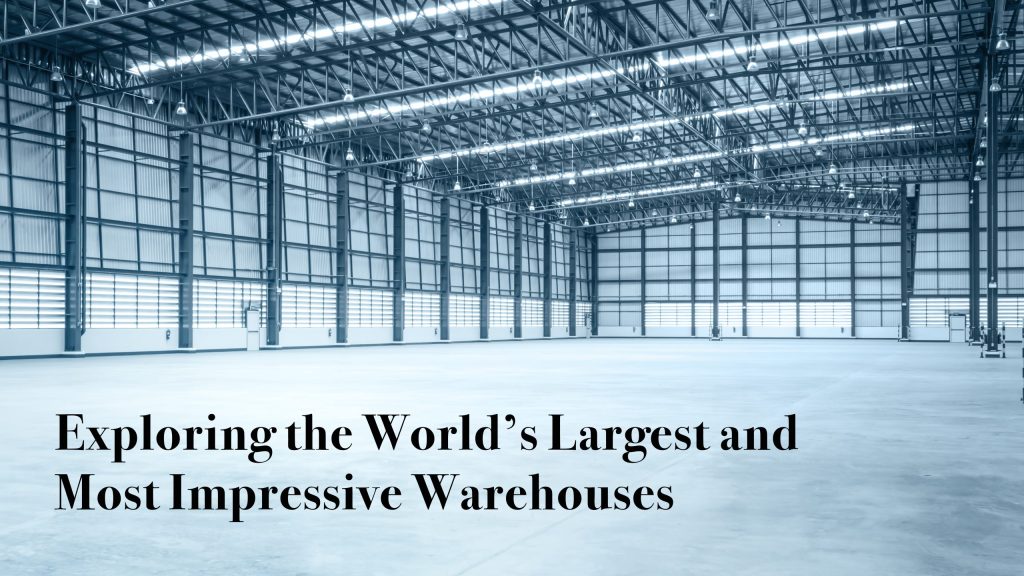
Exploring 4 the World’s Largest Warehouse Projects

In 2023, the value of construction work for warehouses in Australia reached around 8.74 billion Australian dollars. This substantial investment highlights the sustained demand for logistics space, even amid broader economic challenges. Below are some of the world’s most innovative warehouse projects that are setting new benchmarks in size, technology, and sustainability. 1. Tesla Gigafactory, Nevada, USAAt approximately 5.3 million square feet, the Tesla Gigafactory is more than just a massive space. It’s a hub for sustainability, using solar panels and eco-friendly design to power battery production. Tesla aims to power its factories with 100% renewable energy by 2030, contributing to its commitment to lowering carbon emissions. In fact, its solar panels alone generate enough energy to power the factory’s operations, reducing reliance on external energy sources. 2. Meyer Werft Shipyard, GermanyCovering approximately 500,000 square meters, this facility is a model of precision in warehouse construction. It is recognised for its advanced construction techniques and high-tech machinery, which contribute to its efficiency in shipbuilding. This facility can produce two to three luxury cruise ships annually, with each vessel carrying up to 6,000 passengers. 3. Boeing Everett Factory, Washington, USASpanning 98.3 acres, the Boeing Everett Factory holds the title as the largest building by volume in the world, with a capacity of 13.3 million cubic meters. This huge facility is responsible for assembling some of the world’s largest and most iconic aeroplanes, including the Boeing 747, along with other models like the 767, 777, and 787. 4. Moorebank Intermodal Terminal, Sydney, Australia As one of Australia’s most significant logistics hubs, the Moorebank Intermodal Terminal covers 243 hectares and integrates state-of-the-art logistics technologies to improve the efficiency of Australia’s freight system.  By using automated container handling, a dedicated rail freight link to Port Botany via the Southern Sydney Freight Line, and advanced rail infrastructure, it reduces road congestion and minimises environmental impacts. This terminal can move over 1.05 million twenty-foot equivalent units (TEUs) annually through its Import Export (IMEX) terminal, making it a pivotal part of Australia’s supply chain. These projects are setting new benchmarks for what’s possible in warehouse design, showing that innovation, sustainability, and efficiency can go hand in hand. Ready to bring innovation to your next warehouse project?If you’re looking for a Perth commercial builder with proven years of experience in warehouse projects, fill out this form or call 0403 464 064 for a free quote.

Scroll to Top